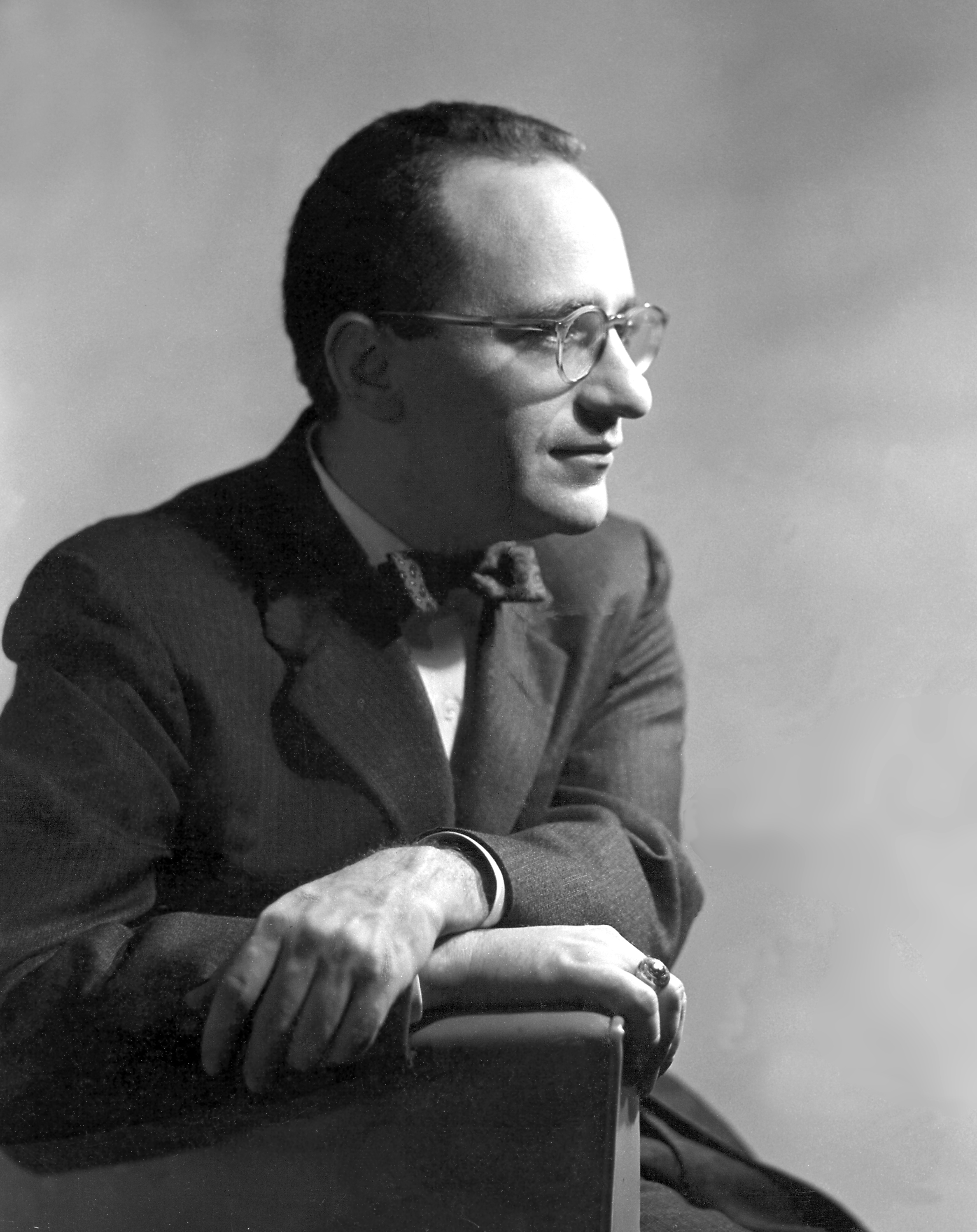
Murray Rothbard was born in New York City in 1926 and died in 1995, leaving behind a body of work so large and so internally consistent that its full scope is easy to miss at first encounter. Most people find him through a single book and discover only later that it is an entry point into something far larger: a complete intellectual system that integrates economics, ethics, history, and political philosophy from a single foundational premise. The premise is simple and its consequences are radical. Each person owns themselves. Everything else follows.
The professional economists of his era mostly ignored him, and the mainstream political class found him too extreme to engage with seriously. Both responses were mistakes, though understandable ones. Rothbard did not work within the methodological conventions of mid-century academic economics, and his political conclusions (that taxation is robbery, that the state is a criminal institution, that central banking is organized fraud) were not the kind of arguments that get you invited to faculty colloquia. He spent twenty years teaching engineers at Brooklyn Polytechnic, two days a week, because the schedule left him time to write. The arrangement suited him perfectly. By the time he accepted an endowed chair at the University of Nevada, Las Vegas in 1986, he had already produced a body of work that no mainstream appointment could have generated.
What makes Rothbard worth reading is the rigor of his method, not the radicalism of his conclusions. He begins from premises a thoughtful person can accept: that humans act purposefully to achieve their goals, that each person is the original owner of their own body and mind. Then he follows the logic wherever it leads without flinching when the destination proves uncomfortable. Most political thinkers stop the argument when it reaches a conclusion that threatens some institution they want to preserve. Rothbard never stopped. That consistency is either his greatest virtue or his most infuriating characteristic, depending on where you entered the argument and what you were hoping to protect.
His intellectual development ran through Ludwig von Mises, whom he met in the late 1940s after reading Human Action and finding in it the most rigorous framework for economic analysis he had encountered. Mises became his mentor, and Rothbard accepted the Misesian methodology, praxeology, the deductive science of human action, wholesale. But he departed from Mises on the ethical foundations of the free market argument. Mises was a utilitarian who defended free markets because they produce better outcomes for human welfare than any alternative arrangement. Rothbard found this insufficient. A utilitarian defense of liberty is always conditional: it concedes that if the numbers worked out differently, coercion would be justified. For Rothbard this was an unstable foundation, and he spent much of his career constructing the alternative, a natural rights defense of liberty grounded in self-ownership, from which free markets and the abolition of the state follow as logical necessities with no utilitarian contingency attached.
The result is a body of work that rewards reading in a specific order, because each book builds on foundations the earlier ones establish. A reader who picks up Man, Economy, and State cold, the thousand-page systematic treatise that is Rothbard's magnum opus, will find it heavy going. A reader who arrives there after the monetary primers and the political manifesto will find it transforms into something different: a thorough proof of claims they already half-accept, worked out with the rigor of a geometry textbook. The reading order below follows this logic.
Start here: The accessible entry points
What Has Government Done to Our Money? (1963)
The best first book. At under 100 pages, it introduces Rothbard's monetary thought with a clarity he rarely equaled in his longer works, explaining how free markets would naturally produce commodity money, why gold won that competition historically, and how governments systematically displaced commodity money with paper currency. Rothbard traces the specific mechanisms of this displacement: legal tender laws, central bank monopoly charters, fractional reserve banking, and finally the complete severing of currency from any commodity anchor, showing each step as a deliberate act by identifiable interests seeking government-enforced advantage. The book ends with the case for a 100% gold standard, the monetary prescription that set Rothbard apart from nearly every other free-market economist of his era, including those who accepted some role for central banking. Decades after publication it circulated widely in Bitcoin communities for reasons that become obvious after reading it. Read this in a single sitting and you will understand why Rothbard considered the entire history of central banking to be a story of organized expropriation.
For a New Liberty: The Libertarian Manifesto (1973)
After the monetary primer, this is the second book. Rothbard wrote it explicitly for a general audience, and it shows: the prose is direct and the polemical energy is high from the first page. The first section grounds libertarianism in the non-aggression principle and natural rights; the second applies these principles to every major domain of contemporary politics, crime, education, welfare, money, foreign policy, without carving out exceptions for popular or seemingly sensible government programs. What distinguishes this from other libertarian primers is Rothbard's willingness to follow each argument to its conclusion. There are no hedged disclaimers about "reasonable" regulations or "necessary" government services. The logic runs all the way through. For many readers this book functions as an introduction not just to libertarianism but to Rothbard's entire intellectual project, since it covers in accessible form the same ground his more technical works cover in rigorous detail. It remains the most energetic single-volume statement of anarcho-capitalist political philosophy in existence.
The Case Against the Fed (1994)
Published a year before his death, this short polemical work targets the Federal Reserve specifically, arguing that it is a banking cartel backed by government authority, not a neutral technocratic institution. Rothbard traces the political history of the Fed's founding in 1913, documenting the role of major banking houses, particularly the Morgan and Rockefeller interests, in drafting legislation that provided them with a government-backed lender of last resort. The argument synthesizes his monetary theory with a class-analysis framework: the Fed transfers wealth from the general public to the banking sector through inflation, and the intellectual mystification of central banking is a deliberate project to obscure this transfer. Though short and pointed in tone, the historical claims are documented and the theoretical argument rests on foundations developed in his longer works. It is the best single volume for understanding Rothbard's view of the relationship between banking interests and state power, and it lands harder after the monetary primer has established the theoretical context.
Building the foundation
America's Great Depression (1963)
Rothbard applies Austrian business cycle theory to the most contested economic event of the 20th century, and the argument inverts the standard narrative at every turn. The Federal Reserve's credit expansion during the 1920s, not laissez-faire capitalism, created the unsustainable boom that collapsed in 1929. Herbert Hoover, widely remembered as a do-nothing free-marketeer, was an aggressive interventionist who raised tariffs, propped up wages, bailed out farmers, and expanded public works, transforming what might have been a sharp correction into a prolonged depression. The New Deal did not rescue the economy from market failure; it extended and deepened Hoover's interventionist approach under a different political brand. Rothbard's Hoover revisionism has since won over even mainstream historians who reject his broader framework. A theoretical introduction, which explains Austrian business cycle theory with more concision than the longer works, opens the book and is accessible to anyone with intermediate economics literacy. Read this after the monetary primer and the manifesto and the Austrian business cycle theory will arrive fully loaded.
Education: Free and Compulsory (1971)
Short enough to read in an afternoon, this essay applies Rothbard's natural rights framework to compulsory schooling with characteristic directness. Compulsory education laws violate the rights of both children and parents, and state education is structurally designed to produce conformity over independent thought. Rothbard traces the American adoption of the Prussian compulsory schooling model in the 19th century, arguing this importation was not an accident but a deliberate choice of an institution designed for social control, producing citizens who accept state authority. The specific claim that makes this essay worth reading is the one mainstream education debates will not touch: that the goal of compulsory mass schooling was the production of a predictable, governable population, and that this goal has been achieved with considerable success. Read it after the political manifesto; the natural rights argument it applies is established there, and the education essay shows what it means when aimed at an institution most people consider benign.
The Mystery of Banking (1983)
What Has Government Done to Our Money? covers monetary history and philosophy; this book provides the technical mechanics. Rothbard walks through the accounting of fractional reserve banking step by step, showing concretely how banks create money by lending out funds they do not possess and how this credit creation drives the business cycle. The historical sections trace how private goldsmiths first discovered they could issue more receipts than they held in gold, and how governments formalized this arrangement through central banking charters, creating a system that profits the financial sector at the expense of everyone else. Rothbard's central conclusion, that fractional reserve banking constitutes fraud because it issues two simultaneous claims on the same property, is the most controversial argument in the book and generated substantial debate among libertarian economists who preferred the free banking approach. Accessible to readers with basic economics literacy, it is best read after the monetary primer and the Fed critique, when the big picture is already in place and the technical details can fill in the mechanisms.
The systematic works
The Ethics of Liberty (1982)
The rigorous philosophical foundation for everything For a New Liberty presents accessibly, this book constructs a systematic natural rights theory rooted in self-ownership and natural law, deriving from it a complete account of property rights, contract, punishment, and the state. The most philosophically demanding sections engage with competing ethical frameworks, including utilitarianism, social contract theory, and value pluralism, each of which Rothbard rejects as incapable of grounding an unconditional theory of individual rights. A sustained critique of Friedrich Hayek's "rules of just conduct" framework argues that Hayek's procedural approach cannot generate substantive conclusions about particular state actions: a theory of liberty that cannot tell you whether taxation is unjust is not a theory of liberty at all. The book remains the most thorough philosophical defense of natural-law libertarianism in the tradition. Read it after the manifesto, because arriving with Rothbard's conclusions already in hand makes the philosophical scaffolding easier to follow.
A History of Money and Banking in the United States (2002, posthumous)
Compiled from Rothbard's historical writings after his death, this volume covers American monetary and banking history from the colonial period through World War II in a continuous narrative that applies his monetary theory to primary sources. The central argument runs consistently: every era of American financial instability, the panics of the 19th century, the inflationary episodes of wartime, the Great Depression, traces back to government interference with money and banking, particularly the cycles of credit expansion enabled by fractional reserve systems with government backing. The work is notable for treating banking legislation not as well-intentioned policy that sometimes failed but as the product of identifiable interest groups seeking government-enforced competitive advantage. Rothbard's revisionist history method here runs at full scale, applied to American finance from the first colonial currency experiments through the New Deal banking legislation. Readers who have absorbed the monetary theory will find this the most historically grounded of his economic works.
Egalitarianism as a Revolt Against Nature, and Other Essays (1974)
A collection of essays on themes the systematic works treat more briefly: the egalitarian impulse in modern politics, the nature of the state, the sociology of intellectual power, and the relationship between liberty and the left. The title essay argues that egalitarianism, the drive toward equality of condition, is a rebellion against the natural order of human differentiation, and that its pursuit requires mounting coercion as reality resists the leveling project. Other essays cover Lysander Spooner and the individualist anarchist tradition alongside the sociology of the intellectual class that legitimizes state power. The collection reveals the breadth of Rothbard's intellectual interests and his willingness to engage with unconventional political coalitions: he was, at different moments, a collaborator with the Old Right and the New Left when those movements opposed state power. Read these after the systematic works have established his foundations; the essays extend and apply.
The advanced corpus
Man, Economy, and State with Power and Market (1962/1970)
The magnum opus. Starting from the axiom of human action, that humans act purposefully to achieve ends with scarce means, Rothbard derives price theory, capital theory, production structure, monetary economics, and a complete analysis of government intervention through deductive logic, building an integrated system that Mises praised on publication. The second half, Power and Market, extends this framework to every conceivable form of government intervention, showing in each case how interference with voluntary exchange distorts market coordination and produces consequences opposite to its stated goals. What distinguishes this from other free-market economics texts is its uncompromising completeness: Rothbard does not carve out exceptions for market failure or public goods but treats them as analytical categories that dissolve under scrutiny. The bundled edition runs over 1,000 pages and is the single most systematic statement of Austrian economics produced by anyone. Arrive here after the accessible works and it reads as a thorough proof of claims you already half-accept, worked out with the rigor of a geometry textbook. Arrive here cold and the first 200 pages will feel like scaffolding without a building. The preparation is the whole point.
Conceived in Liberty (4 volumes, 1975-1979)
Rothbard's four-volume history of colonial America from the early settlements through the end of the War of Independence, written from an explicitly libertarian perspective that reads American history as a continuous struggle between liberty and power. The revisionist argument runs throughout: the American Revolution was primarily about colonial resistance to British mercantilist extraction, and the Constitution, far from completing the Revolution, was in significant respects a centralizing document that accumulated power at the expense of the decentralized governance the Articles of Confederation had permitted. Rothbard draws on primary sources extensively and engages with mainstream historiography, often agreeing with Progressive Era historians on the economic motivations behind political decisions while rejecting their normative conclusions about those motivations. It is the only systematic libertarian history of the colonial period and rewards both general readers interested in American history and scholars seeking an alternative analytical framework. Read it after the political philosophy is solid; the historical argument lands harder when the theoretical framework it illustrates is already in place.
An Austrian Perspective on the History of Economic Thought (2 volumes, 1995, posthumous)
The last major work and in some ways the most ambitious, this two-volume intellectual history covers economic thought from ancient Greece through the marginalist revolution of the 1870s, arguing for a radically different account of which thinkers advanced economic science and which retarded it. The most significant claim in Volume I, Economic Thought Before Adam Smith, is Rothbard's rehabilitation of the Late Scholastics of 16th-century Spain as proto-Austrians who developed subjective value theory and monetary theory two centuries before the economists typically credited with those insights. Volume II, Classical Economics, argues that Adam Smith's decisive influence on the subsequent tradition was largely negative: Smith rejected Scholastic insights in favor of an objective labor theory of value that became the foundation for Ricardo and ultimately Marx, and John Stuart Mill compounded the damage by opening classical liberalism toward state intervention. Both volumes treat the history of economic ideas as genuinely contested terrain, not a march toward contemporary orthodoxy. Published in the year of Rothbard's death, they reflect his lifelong project of grounding economics in a broader intellectual tradition. Read them last; they presuppose familiarity with the history of philosophy and with Rothbard's own positions.
The system behind the books
What holds all of it together is a single foundational move that Rothbard makes once and never retreats from: each person owns themselves, and this self-ownership is a fact about the nature of human agency. Everything downstream follows with logical necessity. Property rights follow because you own the product of your own labor. The non-aggression principle follows because aggression is the uninvited invasion of someone's self-ownership. The condemnation of the state follows because taxation is compelled transfer of what you own, enforced by violence you did not consent to. Rothbard's method, praxeology, the deductive science of human action, means these are logical entailments of premises a thoughtful person can accept, and the argument either holds at the level of the premises or it does not hold at all.
His historical revisionism is not a separate project bolted onto his economics and philosophy. If the state is predatory by nature, the mainstream history that treats state actors as well-intentioned problem-solvers is wrong by construction. America's Great Depression argues that Hoover and Roosevelt made bad policy choices, and it goes further: it demonstrates that the institutions they defended, the Federal Reserve, the banking cartel it backstopped, the legislative machinery of intervention, were built by identifiable interests for identifiable purposes, and those purposes had nothing to do with the public welfare they claimed to serve. A History of Money and Banking makes the same case for the entire arc of American monetary history. Conceived in Liberty makes it for the founding itself. The revisionism is the theory applied to the archive.
Rothbard differed from the other major Austrian economists on precisely the points that made his system more radical and more internally consistent. Ludwig von Mises, his mentor, was a utilitarian who defended free markets because they produce better outcomes than central planning, a claim Rothbard accepted but considered insufficient, since utilitarian defenses of liberty always remain conditional on the calculation coming out right. Friedrich Hayek built his political philosophy around spontaneous order and the limits of knowledge, which generated important insights about why planning fails but could not generate principled objections to particular state actions, which is why Hayek could accept a welfare state and legal tender laws while calling himself a liberal. Rothbard's natural rights foundation closes off these escape routes. If taxation violates self-ownership, the calculation of whether it produces good outcomes is beside the point.
He had fault lines. In his late career, Rothbard pursued a "paleolibertarian" strategy: building a coalition between libertarian economics and paleoconservative cultural politics, on the theory that working-class populists who hated the federal government were more natural allies than the Beltway libertarians at Cato who had made their peace with Washington. In practice this meant endorsing David Duke's policy positions in 1992 as "a breath of fresh air" on taxes and affirmative action, praising Joseph McCarthy's demagoguery as a useful model for disrupting establishment consensus, and writing in terms that abandoned the universalist natural rights framework he had spent decades building. The man who argued in The Ethics of Liberty that rights derive from human nature, full stop, spent his final years arguing for political alliances grounded in the ethnic and cultural resentments his own framework should have ruled out of court. His defenders note that the strategic logic was real even if the execution was ugly; his critics note that the execution was ugly enough to hand the alt-right a respectable intellectual lineage it did not earn. Both observations are correct.
The books in this guide represent Rothbard at his best: the system as he built it, argued from the inside, followed wherever it led. Start with the monetary primer on a free afternoon. Follow it with the manifesto. Work toward the thousand-page treatise with the foundation already in place. What you will find, if you read in order, is that each book is harder to dismiss than the previous one, because the argument grows more complete and the moves you might have used to escape it have been closed off one by one. Whether you end up persuaded or not, you will understand why the thinkers who took Rothbard seriously could not put him down: the system holds together, and systems that hold together are rare enough to deserve that attention on that ground alone.