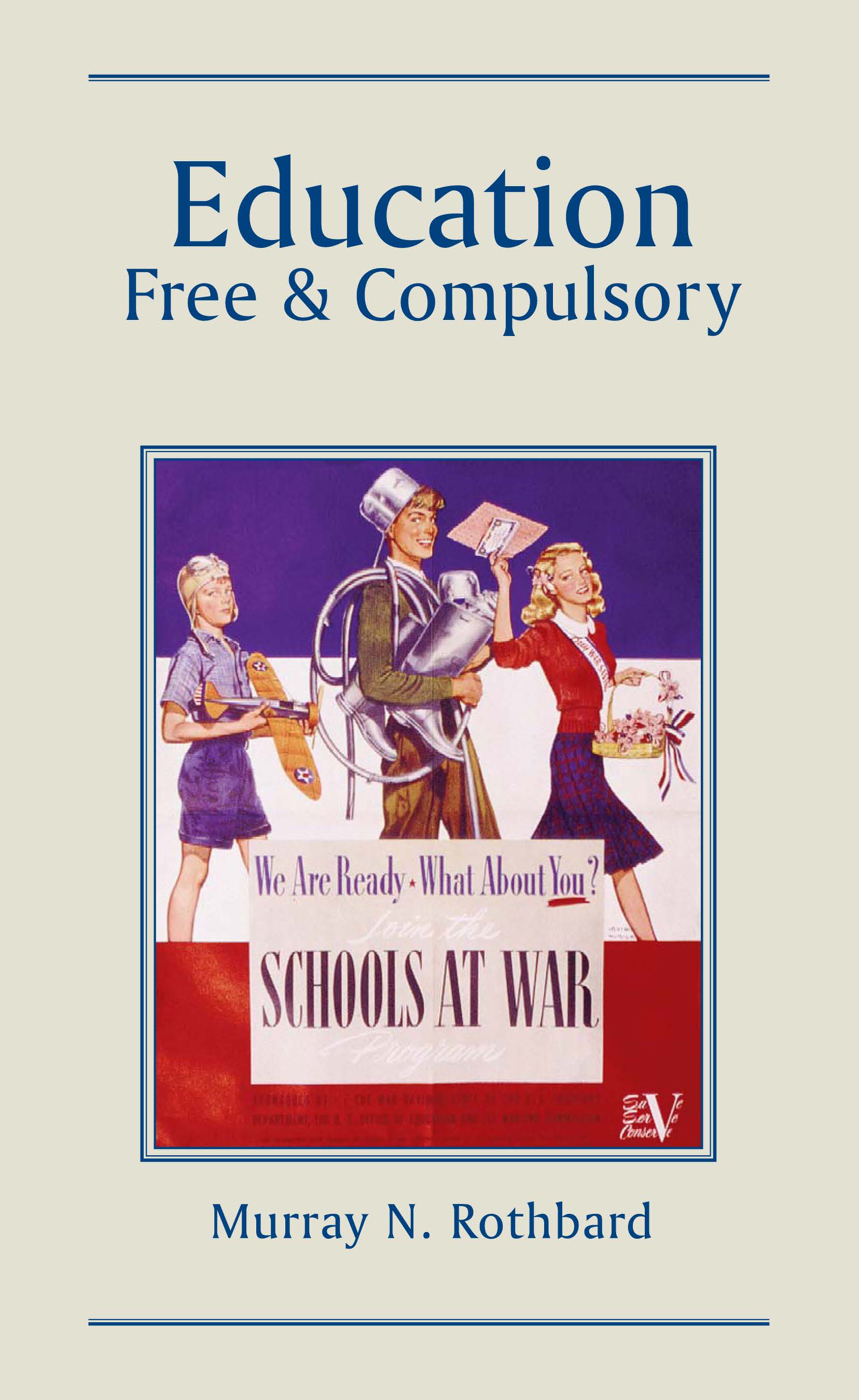
Murray N. Rothbard's 1971 polemic, restored in the 1999 Mises Institute edition, defends parental direction of instruction. He defines education as continuing growth through experience and formal instruction as its systematic part.
Children need different pace and content, so he ranks one-to-one teaching best and accepts private classes as a voluntary budget compromise with tutoring costs.
Attendance laws settle whether a child is schooled, certification what is taught, so a privately owned school teaches the state's minimum content. His hypothetical compulsory newspaper illustrates authority over selection. Whether that authority yields state-supremacy teaching is a historical question; his selective answer traces religious and state conformity from the Reformation through Prussia to American educationists.
His closing blames majority opinion, capacity grading, frills and whole-child ambition for displacing systematic subjects.
He permits defending children against aggressive violence, a parent's included, yet treats failure to instruct, after Spencer, as passive omission outside enforceable rights. The essay suits readers testing freedom of instruction against content control, and its verdict rests on that negative-rights premise.