Library
144 books
A Treatise on Currency and Banking
RecommendedCondy Raguet's banking treatise treats banknotes as debts payable in coin and asks which laws could make American banks pay them.
Subjects (5) for A Treatise on Currency and Banking
Review subjects

A Lodging of Wayfaring Men
Narrated by MaxA novel about a parallel society built on encryption, voluntary trade, and the refusal to ask permission. Set in the early internet age, it imagines what people would do if they finally had tools that the state could not reach.

Legal Foundations of a Free Society
RecommendedKinsella's revised collection argues that property assignment comes before aggression, then applies that ownership rule to punishment, contract and intellectual property.
Subjects (5) for Legal Foundations of a Free Society
Review subjects
Money and the Mechanism of Exchange
RecommendedJevons traces money from coin qualities through warrants and bank clearing to argue for regulated state paper backed by gold deposits.
Subjects (5) for Money and the Mechanism of Exchange
Review subjects
Lex, Rex; or, The Law and the Prince
RecommendedRutherford's 1644 disputation argues rulers hold power in trust from communities under God, so laws restraining tyrants need real public enforcement.
Subjects (6) for Lex, Rex; or, The Law and the Prince
Review subjects
The Pure Theory of Capital
RecommendedHayek's account of capital as inherited, dated, complementary production plans whose values shift with expectations, for economically trained readers studying investment.
Subjects (6) for The Pure Theory of Capital
Review subjects

Rothbard at 100: A Tribute and Assessment
RecommendedSympathetic centenary anthology; several essays apply Rothbard's framework to knowledge, property disputes, collateral-driven asset prices and reform sequencing. Read by question.
Subjects (5) for Rothbard at 100: A Tribute and Assessment
Review subjects

Survival Gardening Notes
RecommendedReviewed edition: 2020
Jim Stumm's newsletter notes from 1978 to 1989 record garden yields, drainage repairs, container plans, labor costs and harvest processing decisions.
Subjects (5) for Survival Gardening Notes
Review subjects

The MoonMath Manual to zk-SNARKs
RecommendedA community manual that teaches zk-SNARKs from modular arithmetic upward, using tiny worked examples to build a Groth16 proof by hand.
Subjects (5) for The MoonMath Manual to zk-SNARKs
Review subjects
New Libertarian Manifesto
RecommendedKonkin's 1980 manifesto proposes counter-economic markets and insurer arbitration as the libertarian route to statelessness; read it to test that transition.
Subjects (5) for New Libertarian Manifesto
Review subjects

Free Culture: How Big Media Uses Technology and the Law to Lock Down Culture and Control Creativity
RecommendedFirst published: 2004 · Reviewed edition: 2004
Lessig's 2004 book shows how insurance demands and fragmented permissions stall creative reuse, and how owners can license sharing through copyright.
Subjects (5) for Free Culture: How Big Media Uses Technology and the Law to Lock Down Culture and Control Creativity
Review subjects
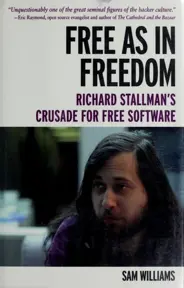
Sam Williams's biography of Richard Stallman follows a moral claim about sharing software into licences and project disputes that tested it.
Subjects (5) for Free as in Freedom: Richard Stallman's Crusade for Free Software
Review subjects
The Privatization of the Roads and Highways
RecommendedWalter Block argues all roads need private ownership and market provision, testing that case against congestion, accidents, insurance, holdouts and Tullock.
Subjects (5) for The Privatization of the Roads and Highways
Review subjects

First published: 1616 · Reviewed edition: 1690
Andreae's seven-day allegorical romance follows an elderly guest through trials where admission and hidden knowledge carry obligations that complicate every reward.
Subjects (5) for The Chymical Wedding of Christian Rosenkreutz
Review subjects
Essai sur la Nature du Commerce en Général
RecommendedCantillon shows entrepreneurs bearing price risk and new money reshaping prices and loans, inside a landed, openly protectionist account of commerce.
Subjects (6) for Essai sur la Nature du Commerce en Général
Review subjects

Economic Sophisms
RecommendedBastiat's two series answer French protectionism by restoring buyers, checking trade totals against transactions, valuing freed labor and exposing protected privilege.
Newman traces how early American privileges created dependent beneficiaries, and how territorial ambition pulled anti-privilege reformers toward the same coercive tools.
Subjects (5) for Cronyism: Liberty versus Power in Early America, 1607–1849
Review subjects

Crypto 101
RecommendedLaurens Van Houtven's unfinished programmer's introduction explains cryptographic primitives by breaking weaker constructions; pair it with current specifications for deployment settings.
Subjects (5) for Crypto 101
Review subjects
Orthodoxy
RecommendedFirst published: 1908 · Reviewed edition: 1927
Chesterton's 1908 apologetic argues Christian doctrine best explains wonder and sustains reform, then defends accepting the Church as a living teacher.
Programming the Blockchain in C#
RecommendedDorier, Strait and Ficsor teach C# programmers to build Bitcoin transactions with NBitcoin, separating spending rules, asset history and trusted services.
Subjects (6) for Programming the Blockchain in C#
Review subjects
An Introduction to Economic Reasoning
RecommendedDavid Gordon's introductory course builds Austrian economic reasoning from purposive choice through price ceilings and money, teaching readers to locate premises.
Subjects (5) for An Introduction to Economic Reasoning
Review subjects
The Second Realm
RecommendedSmuggler and XYZ treat minority exit as coordination: relationships, temporary places, specialized exchange services, voluntary culture, and the power specialists accumulate.
The Joy of Cryptography
RecommendedMike Rosulek's textbook proves cryptographic security through attacker libraries, showing mathematically prepared programmers which adversary, access and assumptions each guarantee covers.
Subjects (5) for The Joy of Cryptography
Review subjects
First published: 1964 · Reviewed edition: 1964
Leonard Read's 1964 case for peaceful exchange and defensive government rests on individual responsibility, from committee guilt to freely offered pay.
Subjects (5) for Anything That's Peaceful: The Case for the Free Market
Review subjects

America's Great Depression
RecommendedRothbard's 1963 history argues that 1920s Federal Reserve credit expansion produced widespread malinvestment and that Hoover's interventions prolonged the 1929–1933 adjustment.
Vera Smith's 1936 study separates fiscal origins of central banking from its claimed advantages and concedes the lender-of-last-resort argument remains powerful.
Subjects (5) for The Rationale of Central Banking and the Free Banking Alternative
Review subjects

Praxeology and Understanding
RecommendedSelgin separates equilibration from coordination to identify which market-tendency claims follow from the logic of action and which require historical judgment.
Subjects (5) for Praxeology and Understanding
Review subjects
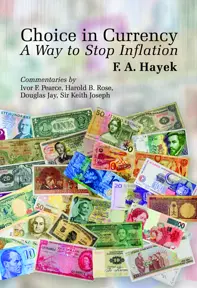
Choice in Currency: A Way to Stop Inflation
RecommendedHayek's 1975 address proposes letting people hold balances and write contracts in other existing currencies, pressing governments to restrain their issue.
Subjects (5) for Choice in Currency: A Way to Stop Inflation
Review subjects
Self-Liberation Notes
RecommendedAn undated reprint of Jim Stumm's edited collection on household autonomy, preserving internal objections, dated assertions, and one troubling punitive vision.
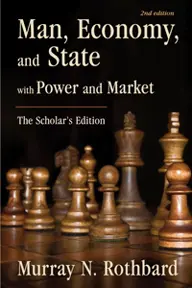
Man, Economy, and State
RecommendedRothbard deduces prices, money, interest, profit and business cycles from purposeful action, then traces how coercive intervention disrupts voluntary market coordination.
Subjects (5) for Man, Economy, and State
Review subjects
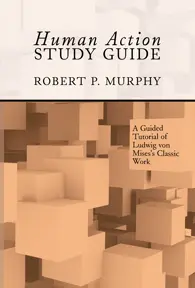
Study Guide to Human Action
RecommendedFirst published: 2008 · Reviewed edition: 2008
Murphy and Gabriel's companion to Mises's Human Action pairs chapter summaries with technical notes and study questions that test compressed arguments.
Subjects (5) for Study Guide to Human Action
Review subjects

Chaos Theory: Two Essays on Market Anarchy
RecommendedFirst published: 2002 · Reviewed edition: 2010
Murphy proposes contracted arbitration, liability insurers and threshold defense contracts to replace state courts and armies, leaving defense cost-splitting bargains unresolved.
Subjects (5) for Chaos Theory: Two Essays on Market Anarchy
Review subjects

Sandworm
RecommendedAndy Greenberg's 2019 investigation follows Russian military hackers from Ukrainian blackouts to NotPetya, explaining supplier trust, attribution deception and fallback capacity.
Subjects (5) for Sandworm
Review subjects
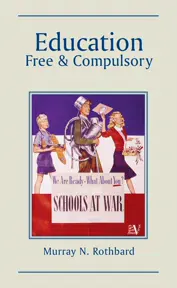
Education: Free and Compulsory
RecommendedFirst published: 1971 · Reviewed edition: 1999
Rothbard's 1971 polemic distinguishes education from formal instruction and argues compulsory attendance and certification hand curriculum choices from parents to government.
Subjects (5) for Education: Free and Compulsory
Review subjects
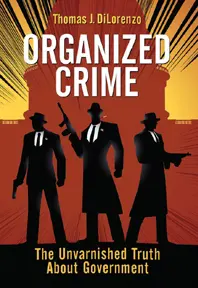
DiLorenzo's 2012 collection of 52 essays applies incentive analysis to rulemakers and their funding; read it and test its sweeping claims.
Subjects (5) for Organized Crime: The Unvarnished Truth About Government
Review subjects
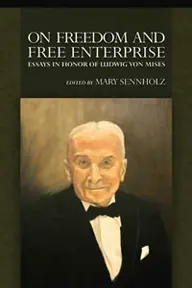
On Freedom and Free Enterprise
RecommendedA 1956 tribute volume of twenty essays honoring Mises, edited by Mary Sennholz, testing how economic reasoning can justify public policy.
Subjects (6) for On Freedom and Free Enterprise
Review subjects

Four Austrian essays, framed by Roger Garrison, argue credit booms misdirect production over time and disagree about answering the later contraction.
Subjects (5) for The Austrian Theory of the Trade Cycle and Other Essays
Review subjects
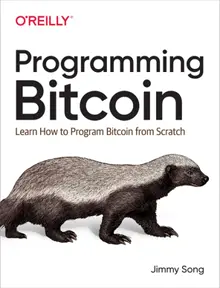
Programming Bitcoin
RecommendedA hands on Python course that builds Bitcoin signatures scripts and transactions from arithmetic and shows what validating nodes must check.
Subjects (5) for Programming Bitcoin
Review subjects
What Has Government Done to Our Money?
RecommendedRothbard's short monetary primer traces money from market exchange through bank claims and coin ratios to the end of gold redemption.
Subjects (5) for What Has Government Done to Our Money?
Review subjects
Individualism and Economic Order
RecommendedHayek's twelve technical essays argue that dispersed knowledge and general legal rules let fallible people coordinate their plans through competitive markets.
Subjects (6) for Individualism and Economic Order
Review subjects

Jeffrey Tucker's 2010 essay collection argues state rules and absorbed conventions narrow choices, which voluntary exchange and private culture can widen.
Subjects (5) for Bourbon for Breakfast: Living Outside the Statist Quo
Review subjects

Money, Bank Credit, and Economic Cycles
RecommendedFirst published: 1998 · Reviewed edition: 2020
Huerta de Soto defends full-reserve demand deposits, arguing credit exceeding voluntary saving lowers relative interest rates, making unsustainable projects look profitable.
Subjects (6) for Money, Bank Credit, and Economic Cycles
Review subjects

How to End War Now
RecommendedAn anonymous 2011 booklet argues that states make war and withdrawing support can end it, but its definitions outrun its evidence.
Economics for Real People
RecommendedGene Callahan explains purposeful choice, money, entrepreneurship, and capital, guiding readers through Austrian economics and its account of investment coordination problems.
Subjects (5) for Economics for Real People
Review subjects

The Ungoverned
RecommendedFirst published: 1985 · Reviewed edition: 2006
Vernor Vinge's 1985 story sets private insurers and legal services against invasion, where contracts outrun reserves and conflicting obligations become pretexts.

The Kybalion
RecommendedA 1908 Hermetic primer argues the universe is mental, then turns polarity and rhythm into disciplines for governing attention and will.
Subjects (5) for The Kybalion
Review subjects
Getting Libertarianism Right
RecommendedHoppe's four pieces, collected in 2018, connect property norms with state incentives and libertarian strategy, then close with a Rothbard memoir.
Subjects (5) for Getting Libertarianism Right
Review subjects
ZKProof Community Reference
RecommendedReviewed edition: 2022
A 2022 community handbook showing how zero-knowledge proofs link security definitions and constructions to circuit encodings and the predicates applications need.
Subjects (5) for ZKProof Community Reference
Review subjects
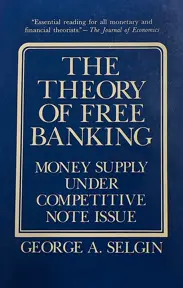
Selgin argues that competing banks issuing redeemable notes can adjust money supply to demand, and names conditions where that adjustment fails.
Subjects (5) for The Theory of Free Banking: Money Supply under Competitive Note Issue
Review subjects
A Graduate Course in Applied Cryptography
RecommendedBoneh and Shoup's unfinished 2023 draft teaches cryptography through attack games that tie every guarantee to stated adversary powers and assumptions.
Subjects (5) for A Graduate Course in Applied Cryptography
Review subjects
The Life of Tom Marshall
RecommendedJim Stumm orders Tom Marshall's newsletter reports into a chronology that separates evidence from guesses and ends in unexplained 1974 silence.
A Short History of Man: Progress and Decline
RecommendedHoppe's theoretical reconstructions of property, industrialisation and state formation reward premise-by-premise logical scrutiny, while his hereditary-intelligence hypothesis needs separate empirical evidence.
Subjects (5) for A Short History of Man: Progress and Decline
Review subjects
Study Guide to Man, Economy, and State
RecommendedRobert Murphy's chapter companion to Rothbard's combined treatise trains readers to test assumptions and rebuild rival objections with the original open.
Subjects (5) for Study Guide to Man, Economy, and State
Review subjects
The Case for a 100 Percent Gold Dollar
RecommendedRothbard's 1962 essay argues dollars should be fixed weights of gold, with every demand claim fully backed, and admits transition costs.
Subjects (5) for The Case for a 100 Percent Gold Dollar
Review subjects
How to Think about the Economy
RecommendedPer Bylund's short Austrian primer teaches readers to trace prices, capital, credit and wage rules through entrepreneurial choices made under uncertainty.
Subjects (6) for How to Think about the Economy
Review subjects
Security Engineering
RecommendedFirst published: 2001 · Reviewed edition: 2020
Ross Anderson's Security Engineering, third edition, explains how policy, mechanism, assurance and incentives determine whether real systems remain dependable under attack.
Subjects (5) for Security Engineering
Review subjects
On the Origins of Money
RecommendedCarl Menger's 1892 essay explains how money emerges from traders seeking more saleable goods, then shows how states later refine coinage.
The Writings of Thomas Jefferson
RecommendedFirst published: 1903 · Reviewed edition: 1907
Posthumous twenty-volume Jefferson collection tracing his reasoning through legal revision, patents, religious liberty and university governance; verify transcriptions against modern editions.
Subjects (5) for The Writings of Thomas Jefferson
Review subjects
Oppenheimer traces the state from conquest through feudal tribute to constitutional rule and argues that ending land monopoly would free labor.
Subjects (5) for The State: Its History and Development Viewed Sociologically
Review subjects

Reviewed edition: 2024
Hülsmann defines gifts through property rights, arguing saving cheapens giving while cheap borrowing that lifts equity returns can make it costlier.
Subjects (6) for Abundance, Generosity, and the State: An Inquiry into Economic Principles
Review subjects
Economic Harmonies
RecommendedBastiat's unfinished treatise explains value, saving, interest and public services as service exchanges that harmonize where force and fraud are absent.
Subjects (5) for Economic Harmonies
Review subjects
Capital and Production
RecommendedStrigl explains how lengthy production depends on saved provision and timely equipment renewal, and how unmatched credit can misdirect that structure.
Subjects (5) for Capital and Production
Review subjects
Tucker's newspaper debates argue that state privilege in money and land sustains interest, profit, and rent; contested mutualist economics, worth reading.
Subjects (5) for Instead of a Book, by a Man Too Busy to Write One: A Fragmentary Exposition of Philosophical Anarchism
Review subjects

Vonu: A Strategy for Self-Liberation
RecommendedRadliff’s vonu survey rewards readers who examine how mobility, community, and digital privacy change their dependencies without assuming protection from coercion.
Subjects (5) for Vonu: A Strategy for Self-Liberation
Review subjects
The Economics and Ethics of Private Property
RecommendedHoppe's essay collection links Austrian economics to a property ethic, offering mechanisms on security and prices alongside a contested ethical proof.
Subjects (5) for The Economics and Ethics of Private Property
Review subjects

Hoppe Unplugged
RecommendedFirst published: 2023 · Reviewed edition: 2023
Booklet pairing Hoppe's interview excerpts with Thomas Jacob's commentary on contract-based private arbitration, insurer restitution, political time horizons, decentralization and property.
Subjects (5) for Hoppe Unplugged
Review subjects

Liberalism
RecommendedMises explains how property, market prices, open trade, and local plebiscites sustain cooperation; the book also misjudges fascism and colonial rule.
Grokking Bitcoin
RecommendedKalle Rosenbaum carefully grows Bitcoin from an office cookie ledger, showing patient nonprogrammers where key authority ends and network validation begins.

The halo2 Book
RecommendedA living online reference from the halo2 developers that teaches Rust programmers to build PLONKish circuits and understand what proofs establish.
Subjects (5) for The halo2 Book
Review subjects
The Case for Gold
RecommendedA 1982 minority report tracing American monetary history toward redeemable commodity money, competing currencies, full-reserve demand claims and a staged transition.
Roger Garrison links loanable funds, production possibilities and Hayekian triangles to compare how saving and credit expansion restructure capital across time.
Subjects (5) for Time and Money: The Macroeconomics of Capital Structure
Review subjects
Proofs, Arguments, and Zero-Knowledge
RecommendedThaler explains how verifiers check outsourced computation, separating completeness, soundness, extraction and zero-knowledge, then tracing SNARK costs through commitments and compilers.
Subjects (5) for Proofs, Arguments, and Zero-Knowledge
Review subjects
A Disquisition on Government
RecommendedCalhoun shows how elected majorities can extract from others and how group vetoes alter bargaining, while rejecting equal entitlement to liberty.
Subjects (5) for A Disquisition on Government
Review subjects
Mastering the Lightning Network
RecommendedA 2021 technical guide teaching developers to treat Lightning payments as negotiated channel state shaped by liquidity, monitoring, and adversary knowledge.
Subjects (6) for Mastering the Lightning Network
Review subjects
The Economics of Inflation
RecommendedFirst published: 1931 · Reviewed edition: 1968
Bresciani-Turroni explains German currency depreciation from 1914 to 1923 through Treasury and commercial credit, and why credible issue limits ended it.
Cryptoeconomics
Narrated by MaxEric Voskuil's axiomatic treatment of Bitcoin as money. Not a book about price or technology, but about the economic principles that have to hold for a money to survive contact with hostile states and rival currencies.

The Corpus Hermeticum
RecommendedMead's 1906 translation of Hermetic sermons, attributed to Hermes Trismegistus, joins a religious cosmology to an ethics of rebirth through knowledge.
Subjects (5) for The Corpus Hermeticum
Review subjects
Klein's essays combine Austrian capital theory with transaction-cost economics to explain how owners organize firms, commit resources and delegate under uncertainty.
Subjects (6) for The Capitalist and the Entrepreneur: Essays on Organizations and Markets
Review subjects
The Ethics of Money Production
RecommendedFirst published: 2007 · Reviewed edition: 2008
Hülsmann judges money production by property and contract, separating honest credit from counterfeit titles beyond deposits and legal privileges suspending payment.
The Praxeology of Privacy
Written by MaxAustrian economics and cypherpunk engineering meet in a study of selective disclosure, the economics of surveillance, and the tools that protect private action.
Subjects (5) for The Praxeology of Privacy
Book subjects
Economics in One Lesson
RecommendedFirst published: 1946 · Reviewed edition: 1952
Hazlitt’s Economics in One Lesson guides beginners through prices, machinery, employment and saving, tracing economic consequences for all groups over time.
Subjects (5) for Economics in One Lesson
Review subjects

Tributes and essays honoring Hoppe; study selectively for arguments on migration, reputation, law, and culture, while weighing their contested premises carefully.
Subjects (6) for A Life in Liberty: Liber Amicorum in Honor of Hans-Hermann Hoppe
Review subjects
Rayo's letters, mostly 1968 to 1974, edited by Jim Stumm with critical commentary, record vonu experiments in nomadism and paid services.
Subjects (5) for Vonu: The Search for Personal Freedom, Part 2, Letters from Rayo
Review subjects

The Doctrine of the Mean (Zhongyong)
RecommendedA Confucian treatise linking measured feeling, watchfulness when alone and persistent study to family duty, ritual, government and claimed cosmic order.
Subjects (5) for The Doctrine of the Mean (Zhongyong)
Review subjects
The Foundations of Morality
RecommendedHenry Hazlitt builds a secular ethics from economics and jurisprudence, judging general rules by their long-run effects on voluntary social cooperation.
Subjects (5) for The Foundations of Morality
Review subjects

Theory and History
RecommendedMises separates the formal logic of action from the fallible historical understanding of motives, and defends the freedom new ideas need.

The Great Taking
RecommendedReviewed edition: 2024
David Rogers Webb argues that securities custody and collateral law were designed for worldwide seizure of investor assets during debt crises.
Subjects (5) for The Great Taking
Review subjects
Menger separates exact theory from historical research by the questions each answers, and shows how institutions like money can emerge unplanned.
Subjects (5) for Investigations into the Method of the Social Sciences
Review subjects
Capital and Interest
RecommendedFirst published: 1884 · Reviewed edition: 1890
Böhm-Bawerk's 1890 critical history, translated by Smart, tests rival theories of interest by separating physical output, capital value and value surplus.
Subjects (5) for Capital and Interest
Review subjects

A Tract on Monetary Reform
RecommendedKeynes argues in 1923 that unstable money redistributes wealth unequally, so central banks should target domestic prices over fixed gold parity.
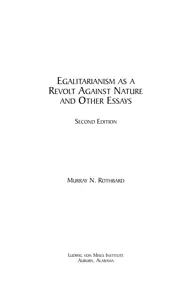
First published: 1974 · Reviewed edition: 2000
Rothbard's collection attacks egalitarian ideals, grounds exchange in legitimate property titles, questions government output accounting, and ties specialization to human difference.
Subjects (5) for Egalitarianism as a Revolt Against Nature, and Other Essays
Review subjects
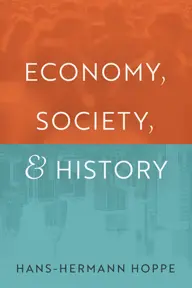
Economy, Society, and History
RecommendedHoppe's 2004 lectures connect money, saving, private law and political incentives into one argument; read for method, test the sweeping history.
Subjects (5) for Economy, Society, and History
Review subjects

Little Brother
RecommendedDoctorow's 2008 novel follows a teenager who builds an encrypted network against surveillance and learns its limits against infiltration and coercion.
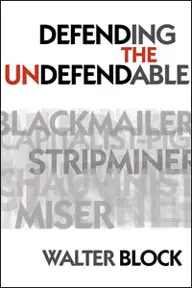
Defending the Undefendable
RecommendedWalter Block's 1976 defense of reviled occupations, suited to readers testing moral disapproval, coercion, and economic consequences while questioning his assumptions.
Subjects (5) for Defending the Undefendable
Review subjects
The Great Learning (Daxue)
RecommendedA short Confucian treatise tracing government to private sincerity, read in Legge's 1869 translation with its layered authorship and limits exposed.
Subjects (5) for The Great Learning (Daxue)
Review subjects
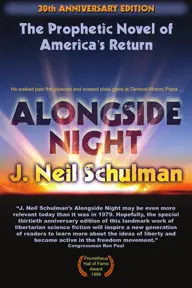
Alongside Night
RecommendedA teenager searching collapsing New York for his missing family enters an underground economy whose banks and arbiters answer practical questions.
Selected Essays on Political Economy
RecommendedBastiat's French essays trace who pays for political promises, applying unseen-cost reasoning to taxes, credit, property law, strikes, and customs accounts.
Subjects (6) for Selected Essays on Political Economy
Review subjects
The Ultimate Foundation of Economic Science
RecommendedMises's 1962 essay on economic method defends deductive theory of purposeful action against positivism; best for readers who know economic theory.
Subjects (5) for The Ultimate Foundation of Economic Science
Review subjects

The Secret Teachings of All Ages
RecommendedHall's 1928 encyclopedia interprets esoteric symbols, initiation rites, ciphers and ethical discipline; read it for his correspondences, verifying lineage claims independently.
Subjects (5) for The Secret Teachings of All Ages
Review subjects
Principles of Economics
RecommendedFirst published: 1871 · Reviewed edition: 2007
Menger's 1871 treatise derives input values, exchange, price bounds and money from individuals ranking their needs against limited quantities of goods.
Subjects (5) for Principles of Economics
Review subjects
No Treason: The Constitution of No Authority
RecommendedSpooner's 1870 pamphlet tests whether voting, taxpaying or ancestral ratification creates personal consent; for readers examining political obligation and war debt.
Subjects (5) for No Treason: The Constitution of No Authority
Review subjects
The Case Against the Fed
RecommendedRothbard's compact polemic argues that bank credit expansion and political coalitions produced the Federal Reserve, then proposes a redefined gold dollar.
Against Intellectual Monopoly
RecommendedMichele Boldrin and David K. Levine argue creators can earn without excluding imitators, examining steam engines, patent pools, software and pharmaceuticals.
Subjects (5) for Against Intellectual Monopoly
Review subjects
Capital, Expectations, and the Market Process: Essays on the Theory of the Market Economy
RecommendedLachmann's essay collection explains how expectations, capital complementarity and plan revision shape market coordination, offering advanced readers a demanding causal framework.
Subjects (5) for Capital, Expectations, and the Market Process: Essays on the Theory of the Market Economy
Review subjects
Hayek argues private issuers competing for money holders would supply better money, and he works through how such currencies could function.
Subjects (5) for Denationalisation of Money: The Argument Refined
Review subjects
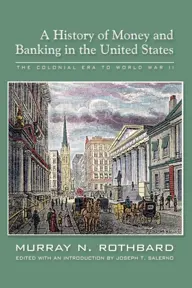
Rothbard's collection traces American money through redemption rules and banking coalitions, though its motive attributions often outrun the evidence it supplies.
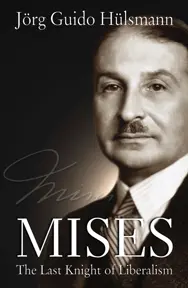
Mises: The Last Knight of Liberalism
RecommendedHülsmann's admiring archival biography follows Mises from Galicia to New York and shows how working institutions shaped his developing economic ideas.
Subjects (5) for Mises: The Last Knight of Liberalism
Review subjects
First published: 2006 · Reviewed edition: 2006
Benkler explains when networked volunteers can produce information beside markets and firms, and how task design and law shape that reach.
Subjects (5) for The Wealth of Networks: How Social Production Transforms Markets and Freedom
Review subjects
Capital and Its Structure
RecommendedLachmann explains how entrepreneurs build, test, and regroup specialized capital combinations, connecting expectations, accounts, finance, and business cycles through structural analysis.
Subjects (6) for Capital and Its Structure
Review subjects
Bitcoin and Cryptocurrency Technologies
RecommendedA Princeton textbook for programmers on Bitcoin's consensus, privacy and contract mechanisms, what each assumes, and which duties stay outside them.
Subjects (6) for Bitcoin and Cryptocurrency Technologies
Review subjects

Diffie and Landau connect key exchange, wiretap law and surveillance institutions, showing why encryption, legal doctrine and oversight address separate problems.
Subjects (5) for Privacy on the Line: The Politics of Wiretapping and Encryption
Review subjects
Human Action
RecommendedMises's treatise connects purposeful choice to prices, monetary calculation, enterprise and capital, stating premises openly so readers can test each link.
Subjects (5) for Human Action
Review subjects

Profit and Loss
RecommendedMises explains how entrepreneurial profit and loss arise from judging future consumer prices against costs, and why abolishing profit stalls adjustment.
Subjects (5) for Profit and Loss
Review subjects
Deep Freeze: Iceland's Economic Collapse
RecommendedBagus and Howden trace Iceland's 2008 bank collapse to cheap credit, short foreign funding and rescue expectations; best for monetary-economics readers.
Subjects (5) for Deep Freeze: Iceland's Economic Collapse
Review subjects
The Law
RecommendedBastiat's pamphlet tests every law by asking whether its force could rightly be used by any individual defending person or property.
A 2009 Festschrift for Hans-Hermann Hoppe in which admiring contributors test property-based political economy against passage, authority, entrepreneurial judgment and persuasion.
Subjects (5) for Property, Freedom, and Society: Essays in Honor of Hans-Hermann Hoppe
Review subjects
Patrick Newman traces how American interest groups sought government privileges from 1849 to 1929, and how later appointments decided who benefited.
Subjects (5) for Cronyism: Rise of the Corporatist State, 1849–1929
Review subjects
Economic Science and the Austrian Method
RecommendedHoppe's compact monograph argues economics yields necessary conditional laws from purposeful action, then extends that method into contested claims about knowledge.
Subjects (5) for Economic Science and the Austrian Method
Review subjects
A Humane Economy
RecommendedRöpke argues competitive markets coordinate choices while relying on dispersed property, families, law, sound money and moral reserves replenished outside markets.
Subjects (5) for A Humane Economy
Review subjects
An Essay on Capital
RecommendedFirst published: 1966 · Reviewed edition: 1966
Kirzner explains capital goods as interim stages of ongoing plans and applies that view to sunk investment, waiting, durability and measurement.
Subjects (5) for An Essay on Capital
Review subjects
Rothbard's 1967–68 newspaper columns, edited by Justin Raimondo, test Sixties alliances over war, secession, business, and money against consistent libertarian principle.
Subjects (5) for Never a Dull Moment: A Libertarian Look at the Sixties
Review subjects

Reviewed edition: 2006
Denson argues presidents provoke first shots, seize emergency power and serve protected commerce; his Pearl Harbor foreknowledge claims outrun the evidence.
Subjects (5) for A Century of War: Lincoln, Wilson, and Roosevelt
Review subjects
Eleven essays edited by Hans-Hermann Hoppe examine stateless defense through ethics, insurance, privateering, public goods and secession, with sharp internal disagreements.
Subjects (5) for The Myth of National Defense: Essays on the Theory and History of Security Production
Review subjects
Bureaucracy
RecommendedFirst published: 1944 · Reviewed edition: 1944
Mises's 1944 Bureaucracy compares profit management with rule-bound administration of unpriced services, explaining why detailed budgets and rules replace profit accounts.
Lessons for the Young Economist
RecommendedReviewed edition: 2010
Murphy's introductory textbook derives specialization, saving, profit, calculation, price controls and business cycles from purposeful choice, counting forgone alternatives as costs.
Subjects (5) for Lessons for the Young Economist
Review subjects
Ralph Raico's essays and reviews argue that twentieth-century wars enlarged domestic state power; read them as a contestable interpretation worth testing.
Subjects (5) for Great Wars and Great Leaders: A Libertarian Rebuttal
Review subjects
Rothbard argues government-debt underwriting and bank rescues give financiers motives to shape American foreign policy, from Civil War loans to 1984.
Subjects (5) for Wall Street, Banks, and American Foreign Policy
Review subjects
The Wealth of Nations
RecommendedSmith traces wealth to specialization, market reach, capital, institutions, and public finance, offering conditional policy judgments that reward patient, critical reading.
Subjects (6) for The Wealth of Nations
Review subjects
Left and Right: The Prospects for Liberty
RecommendedFirst published: 1965 · Reviewed edition: 2010
Rothbard's 1965 essay argues liberty's long-run prospects are strong because planning falters, while warning that incumbents and coalitions bend liberal doctrine.
Subjects (5) for Left and Right: The Prospects for Liberty
Review subjects
The Theory of Money and Credit
RecommendedFirst published: 1912 · Reviewed edition: 1953
Mises argues purchasing power issued by banks can redirect investment toward longer production, which depends on real capital goods and labour.
Subjects (5) for The Theory of Money and Credit
Review subjects
The Permanent Floating Voluntary Society
RecommendedKerry Thornley's six 1966 essays treat boats as income-bearing capital for exit, offering useful institutional questions alongside dated, legally careless assumptions.
Subjects (5) for The Permanent Floating Voluntary Society
Review subjects
First published: 1999 · Reviewed edition: 2011
Peter Lewin treats capital as a changing structure of plans whose values guide business calculation and shift whenever entrepreneurs revise expectations.
Subjects (6) for Capital in Disequilibrium: The Role of Capital in a Changing World
Review subjects
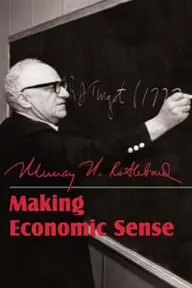
Making Economic Sense
RecommendedRothbard's short, mostly Free Market essays apply Austrian price, money and fiscal reasoning to policy news for readers with basic economics.
Two Treatises of Government
RecommendedFirst published: 1689 · Reviewed edition: 1764
Locke answers Filmer's case for inherited absolute kingship, then argues government rests on consent and loses authority when legislators rule arbitrarily.
Subjects (5) for Two Treatises of Government
Review subjects
The Bitcoin Standard
RecommendedSaifedean Ammous's 2018 book judges Bitcoin as monetary technology, testing supply response, saving incentives, capital formation and custody against gold's record.
Subjects (5) for The Bitcoin Standard
Review subjects
Natural Law; or The Science of Justice
RecommendedSpooner's 1882 pamphlet holds that justice precedes legislation and binds everyone, then traces dependent wage labor to violent seizure of land.
Subjects (5) for Natural Law; or The Science of Justice
Review subjects
Riggenbach's 2009 map of American revisionist history links war, fiction, textbooks and politics, then supplies a fairness test readers can apply.
Subjects (5) for Why American History Is Not What They Say: An Introduction to Revisionism
Review subjects

A sixteenth-century essay asking why many obey few, tracing habit, spectacle and patronage, and proposing that withdrawn support can undo tyranny.
Subjects (5) for The Politics of Obedience: The Discourse of Voluntary Servitude
Review subjects
Rothbard's history reads the 1784 to 1791 settlement as a counterrevolution built from bargains over debt, money, trade, mail and amendments.
Subjects (5) for Conceived in Liberty, Volume 5: The New Republic, 1784–1791
Review subjects
The Mystery of Banking
RecommendedRothbard's 1983 monetary primer uses bank balance sheets to explain deposit creation and central-bank reserves before defending a gold-backed banking reform.

Market Theory and the Price System
RecommendedKirzner's 1963 intermediate price theory text explains markets as processes in which entrepreneurs notice price discrepancies, revise plans, and correct errors.
Subjects (6) for Market Theory and the Price System
Review subjects
Risk, Uncertainty, and Profit
RecommendedKnight's 1921 treatise shows how measurable risk becomes a pooled cost while uncertainty, borne through responsible judgment, generates profit and loss.
Subjects (5) for Risk, Uncertainty, and Profit
Review subjects
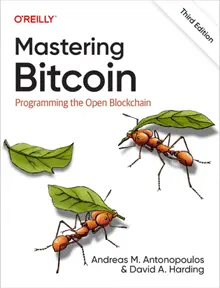
Mastering Bitcoin
RecommendedA developer's reference showing how Bitcoin keys, recovery data, signatures, fees, relay policy and channel deadlines must work together for self-custody.
Subjects (7) for Mastering Bitcoin
Review subjects
An anonymous tract urges the jobless to rebuild through useful production and trusted cooperation, leaving owners' rights an open legal question.
Subjects (5) for A No-Holds-Barred Guide for the Unemployed but Not Helpless
Review subjects
No books match. Remove a filter or try different words.
Back to library search